Perplexity Computer: The Next-Generation Digital Worker
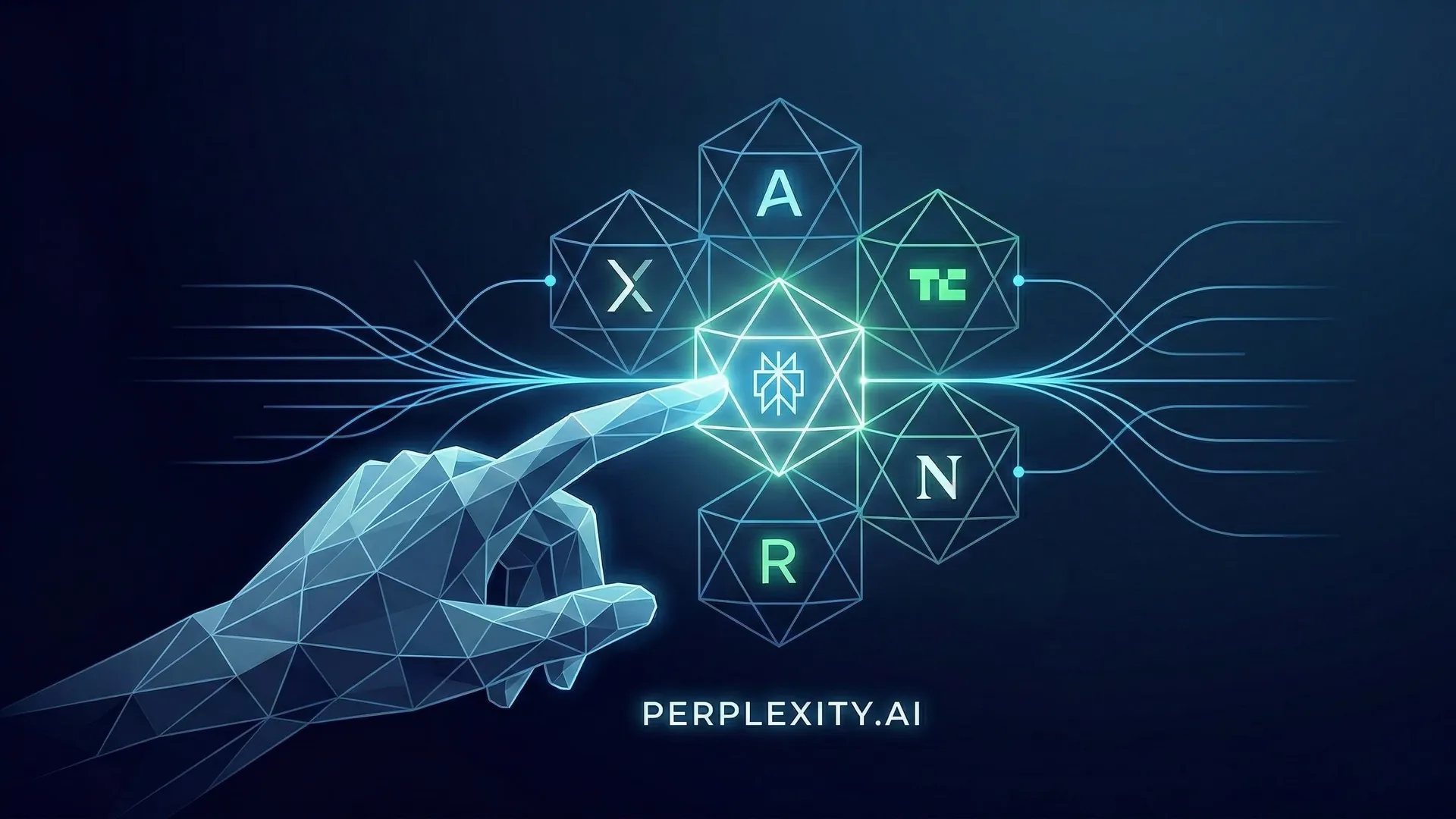
On February 25, 2026, Perplexity AI unveiled Perplexity Computer, a product that marks a paradigm shift in the AI industry. The cloud-based multi-agent platform orchestrates 19 AI models simultaneously and functions as a universal digital worker that can handle projects from conception to completion fully autonomously.
Executive Summary: A Universal Digital Worker
CEO Aravind Srinivas describes the philosophy behind it: A computer is no longer a physical object but a working group of files, tools, memory, and models that work together to achieve a specific outcome. The name "Computer" references the original meaning of the term: a person who autonomously divides and performs complex calculations.
Core Functionality
Perplexity Computer can handle projects from research through design and programming to deployment fully autonomously. The system is not a chatbot but an orchestrator that deploys the most suitable AI models for each subtask.
Technical Architecture: Multi-Model Orchestration
The heart of Perplexity Computer is a multi-model orchestration framework that deliberately avoids using a single Large Language Model. Instead, different AI architectures are deployed like specialized instruments in an orchestra.
The Conductor: Claude Opus 4.6
A central conductor, currently Anthropic Claude Opus 4.6, manages the entire orchestration process. When a task is received, the orchestrator breaks down the goal into a dependency graph of subtasks and assigns them to the most suitable sub-agents.
| Model | Developer | Functional Role |
|---|---|---|
| Claude Opus 4.6 | Anthropic | Core reasoning engine, conductor |
| Gemini 3.1 Pro | Deep research, sub-agent spawning | |
| GPT-5.2 | OpenAI | Long-context recall, broad search |
| Grok 4.1 | xAI | Fast, lightweight operations |
| Nano Banana | - | Image generation, UI/UX mockups |
| Veo 3.1 | Video generation | |
| Sonar | Perplexity | Real-time search integration |
| Kimi K2.5 | Moonshot AI | Logic-based problem solving |
The system is designed to be model-agnostic: when new, more capable models appear, individual components of the orchestra can be swapped without redesigning the entire framework.
Isolated Sandbox Environment
Each project in Perplexity Computer receives an isolated, cloud-based compute environment with:
With command-line tools (CLI), sub-agents can create directories, process files, and execute scripts.
Not just text search, but active interaction with web interfaces in real-time.
Maintains context across sessions and platforms, preventing context rot.
Authenticated integrations with Gmail, Outlook, GitHub, Linear, Slack, Notion, and more.
Security Approach
The security approach differs fundamentally from local agent solutions like OpenClaw. While OpenClaw runs directly on the user's machine and security researchers described the attack surface as "nearly limitless," with Perplexity Computer, all agent-driven activity takes place in a managed cloud sandbox .
Task Processing: Task Graphs and Adaptive Thinking
When a prompt is received, the system creates a task graph: It determines what must happen first, what can run in parallel, and which AI model is best suited for each subtask.
Claude Opus 4.6 uses Adaptive Thinking: The model autonomously determines what reasoning effort is required for a task. This enables the system to save token credits on simple tasks and deploy full cognitive power for complex analyses.
Core Capabilities: From Research to Automation
Perplexity Computer combines all current AI capabilities in a single system:
Accurate, cited information from the web with seven parallel search types: Web, Academic, People, Image, Video, Shopping, and Social.
Complete tasks across platforms with authenticated integrations to existing work tools.
Create visual content, images, and videos, as well as generate documents, reports, presentations, and spreadsheets.
Schedule recurring tasks with persistent memory across sessions.
Practical Examples from the Livestream
Various tasks were demonstrated on the public livestream (perplexity.ai/computer/live):
Creating Interactive Websites
An S&P 500 bubble chart as a shareable website with automatic data research.
Animated Data Visualizations
Animated GIF of Tesla stock performance over 10 years with annotated turning points.
Brand-Compliant App Development
From brand guidelines to working apps with live preview and PNG export in under 30 minutes.
Research Packages
Parallel research across seven search types with source comparison and contradiction analysis.
Pricing Model: Usage-Based Credit System
The launch of Perplexity Computer marks a departure from the flat-rate model toward a usage-based pricing model that reflects the enormous compute costs of 19 models running in parallel.
| Feature | Perplexity Pro | Perplexity Max |
|---|---|---|
| Monthly | 20 USD | 200 USD |
| Annually | 200 USD | 2,000 USD |
| Computer Access | Limited | Full access |
| Monthly Credits | Not available | 10,000 credits |
| Launch Bonus | - | 20,000 credits (30 days) |
| Advanced Models | Standard Reasoning | Opus 4.6, Reasoning Toggle |
Token Management in the Agentic Era
In the agentic era, token management becomes as critical as data management. Perplexity Computer offers differentiated control options:
- Model Selection per Sub-Agent Task: You can determine which model handles which subtask
- Spending Caps: Spending limits to control token consumption
- Performance vs. Cost Optimization: Cheaper models for simple tasks, premium models for complex analyses
Strategic Positioning: Perplexity as a Company
Perplexity AI has raised approximately 1.5 billion US dollars in funding since its founding about three years ago. By late 2025, valuations of up to 50 billion US dollars were being discussed. Annual recurring revenue (ARR) recently approached 200 million US dollars.
Investors include Jeff Bezos, NVIDIA, and SoftBank. The market launch of Perplexity Computer signals a strategic shift: away from dependence on advertising revenue toward a focus on subscription and enterprise monetization.
Samsung Integration: Hey Plex
Samsung has integrated Perplexity as a standalone AI agent on Galaxy S26 series devices. The assistant is activated via the wake word Hey Plex or by long-pressing the side button.
Perplexity functions as a search and inference backend for Samsung's Bixby assistant, delivering evidence-based, up-to-date answers.
Samsung pursues a strategy with Gemini, Bixby, and Perplexity. A survey shows that 80 percent of users want more than two AI assistants.
Comet Browser for iPhone
Parallel to the introduction of Perplexity Computer, availability of the Comet Browser for iPhone was announced for March 11, 2026. Comet is a Chromium-based browser positioned as a personal assistant and thinking partner that integrates AI-powered search, contextual summaries, and task automation directly in the browser.
Significance for European Businesses
Perplexity Computer presents particular opportunities and challenges for the European market:
The cloud-based architecture requires careful examination regarding data processing and storage location. Companies should carefully analyze Perplexity AI's privacy policy.
As an AI system with far-reaching capabilities, usage must be evaluated within the framework of the EU AI Act, especially for business-critical decisions.
European SMEs can use the multi-agent platform to automate tasks that previously required specialized teams, from market research to document creation.
Comparison with Competitors
Perplexity Computer vs. Claude Cowork
The relationship between Perplexity Computer and Claude is complex: both complement and compete with each other simultaneously.
| Aspect | Perplexity Computer | Claude Cowork |
|---|---|---|
| Models | 19 models from various providers | Anthropic models only |
| Execution | Cloud-based, asynchronous | Local on user's machine |
| Runtime | Weeks to months possible | Session-based |
| Desktop Control | Not available | Claude Computer Use possible |
| Core Engine | Claude Opus 4.6 (as base) | Claude native |
Perplexity is one of Anthropic's largest customers, as Claude Opus 4.6 serves as the central reasoning engine. Without Claude, the orchestration layer loses its primary brain.
Perplexity Computer vs. Manus AI
| Aspect | Perplexity Computer | Manus AI |
|---|---|---|
| Number of Models | 19+ models | Multiple (Claude, Qwen, etc.) |
| Connectors | Hundreds | ~29 tools |
| Availability | Max subscribers (200 USD/month) | Closed beta with waitlists |
| Transparency | Task logs and artifacts | Real-time desktop view |
Benchmark Performance: Why Claude Opus 4.6?
The choice of Claude Opus 4.6 as the core engine is based on its superior performance in agent-based benchmarks:
Conclusion: The Future of Computing
Perplexity Computer is more than a new feature: it is an architectural statement about the future of computing. The system transforms AI from a passive knowledge machine into an active digital workforce.
Key Takeaways
- Multi-Model Orchestration: 19 specialized AI models work together instead of relying on a single LLM
- Asynchronous Long-Term Tasks: Projects can run for hours, days, or months without permanent connection
- Cloud Sandbox Security: Isolated environment with real file system and browser reduces attack surfaces
- Usage-Based Pricing: Credit system reflects the compute costs of 19 parallel models
- Ecosystem Integration: Samsung partnership and Comet Browser ensure presence across all platforms
The integrated product suite of Perplexity Search, Computer, and the Comet Browser, along with the Samsung partnership, aims to ensure the orchestrator is present wherever work gets done. For power users and businesses, this means: The transition from managing individual tasks to commissioning an entire fleet of AI agents has begun.